


Descriptions:
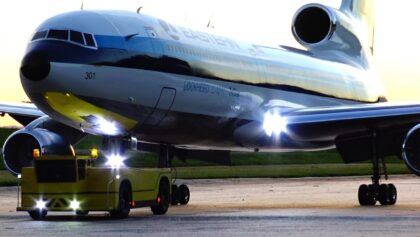
R/C Skylink Super Guppy Airbus transporter Crash loose the Center of Gravity
Beschreibung zum Video:
3.Airlinermeeting 2015/Oppingen Au Germany
R/C Skylink Super Guppy Airbus transporter Crash loose the Center of Gravity 🙁
–Join us on Facebook–
–Follow me on Twitter–
Freitag – Newsletter, jetzt anmelden!
Vollständiger Text aus dem Video: R/C Skylink Super Guppy Airbus transporter Crash loose the Center of Gravity
Hinweis: Text aus der automatischen Spracherkennung aus dem Video ist allgemein bekannt ungenau!
Für den Inhalt des Videos ist der VideoCreator: RCHeliJet verantwortlich.
#Skylink #Super #Guppy #Airbus #transporter #Crash #loose #Center #Gravity
rchelijet, source





😢
S e c o n d w o r l d
Batterie nicht richtig fest und nach hinten gerutscht? Schade.😥
Angle of attack you idiot!
The CG should take into account the drag of the high fuse that tends to lift the nose.
Kein Wunder mit so schmalen Flügeln.
Ouch
now it crashed again at 8.7.2017
The super guppy was built by Boeing, they used the cockpit of the 707. Why do you call it an Airbus?
a fuselage is generally built on the wings whereas this model, it seems the wings are an afterthought and fuselage was designed first. it is very hard to control its flight. also, the wings in today's planes are swept back to reduce the drag while in this model the wings are straight which causes vibration and reduces stability. the mass also doesn't looks centralized which is creating a moment force.
What does loose the center of gravity mean?
imagine how much lipo's you could put inside that fuselage! 😛
I think they Speed Limit the real ones, maybe it should be flown slower with more flight restrictions.
she is so fat.
ele nao podia enclinar tanto assim
but they can make a new wings and new engine for the plane and the plane can fly
Probably a stall?
Center of gravity? Trim? Pilot-induced oscillation?
Hope she flies again.
She will fly again !!!
Looks like the rudder is stuck to the left. Plane yaws the whole time from takeoff.
Amazing model! Looks great, back on yr horse soon:-)
The human mind never seem to stop impressing me…Gotta give these guys the credits for trying!!!Thanks, guys, for sharing!
These things are flying around Ellington field In Houston all the time! Jet version though, and real, delivering parts to NASA.
I have designed and kit built many multi-engine planes and one consistent problem I face each time is finding appropriate prop sizes in the right pitch. That looked a lot like the issues I have had where the prop is almost the right one but just too low in pitch. Low pitch can make a multi engine plane look and fly like it is tail heavy when it really just needs more pitch speed. I have seen many multi-engine planes fly their maiden flights and look like they are always on the verge of falling out of the sky because low pitch speed is causing them to fly at or near stall speed. Just a little to much elevator and they stall and drop a wing and if your not high enough there is no hope of recovery.
Dave
Luckiely the plane isnt damaged that much I think…
the super Guppy was a modified LOCHEED Electra II, not an airbus
Kaboom, there was supposed to be an earth shattering kaboom!
The crash was impressive. I think the pilot have thanks is plane for crashing in a weathfield ! 😀
Did you know why the CG is lost ? Wrong fixation of components ?
Did the pilot fabricate the guppy himself or was it a kit ? amazing reguardless
Must be one of the ugliest planes every made ,but sorry to see it go in . Hope it will be flying at the earliest opportunity .
Awesome plane, awesome background music. 👌🏻
no no nooo no noo no
Hmm das sieht mir eher nach einem überzogenen Flugzustand mit einer zu langsamen Kurvengeschwindigkeit aus. Dabei entsteht am kurveninneren Flügel ein Strömungsabriss und das Modell kippt über die Seite ab. Besonders fatal wenn dann der riesige Rumpf noch Seitenwind erhält und das ganze Modell fast steuerlos dazu noch einen Nosedive macht. Bis wieder Strömung da war war die Maschine längst am Boden.
haha..why use turbo propeler..prefer to use turbine jet for more power and stability tho..funny video
not too bad damage, the wheat saved any serious damage, and looks like it will soon fly again.
Poor design? Bad piloting? Airbus? You decide…
Ohh no no May Day May Day… was such brilliant flying 🙂 Thumbs up and hope to see that baby back in air 🙂
nice video. damage didn't look to bad hope he can fix it.
thumbs up 🙂
Ouch that's no fun….. Looks like it's stalling in the air. Looked like it was hard to control right from the take off too. Was it the maiden flight with this bird?
Wow! I didn't even think it would get off the ground.
My LIKE felt fat as this guppy puppy as it staggered up to the LIKE button.. trust me, he did hurry. And it got there!
Ouch. Hopefully the pilot can repair it.
Engine failure? Some damages all the same!!